
Do Air Purifiers Really Work?
Could your environment be harming you?

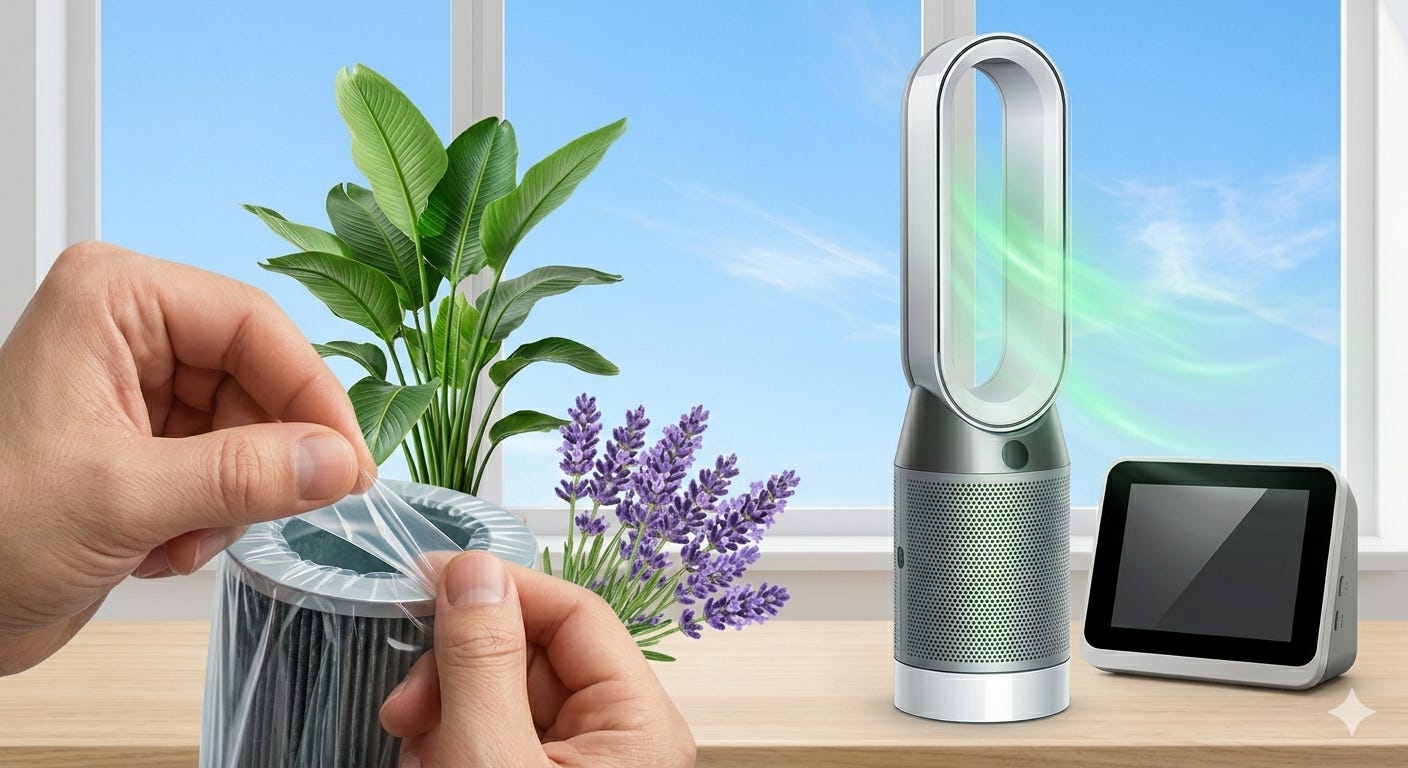
I live in an area that gets really smoky during forest fire season so I decided to buy an air purifier. If you live in an area where this isn’t really a problem, should you still purchase one?
I bought an air quality monitor. Here is the before:
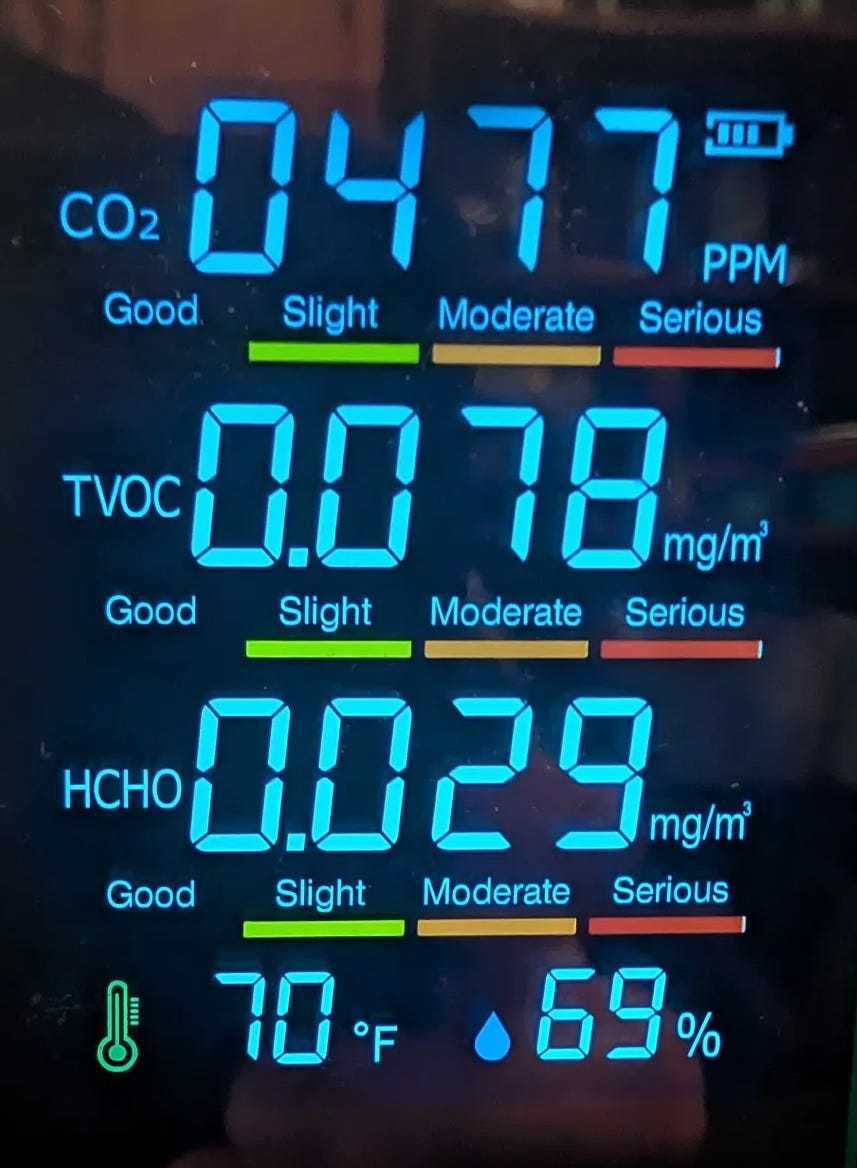
Lets break all this down. The two bottom numbers are pretty straight forward, temperature and humidity.
From top to bottom, co2 is how much carbon dioxide is in the air. This isn’t really something an air purifier can deal with, but it will let you know if you have pure ventilation. If it gets above 1000 you may notice it’s difficult to focus as your not getting optimal oxygen to you brain. Above 2000 you may get headaches and drowsiness and above 5000 you should not be in the room until ventilation is fixed.
TVOC or Total Volatile Organic Compounds is basically how much random particulates are floating around in the air. This can be from cleaning products, paint, air fresheners, smoke, vape, candles, cooking, etc. You want this below .5.
HCHO is formaldehyde. This is from pressed wood, cabinets and flooring, new carpets, glues, cigarette smoke, gas stoves, candles. This should be under .03.
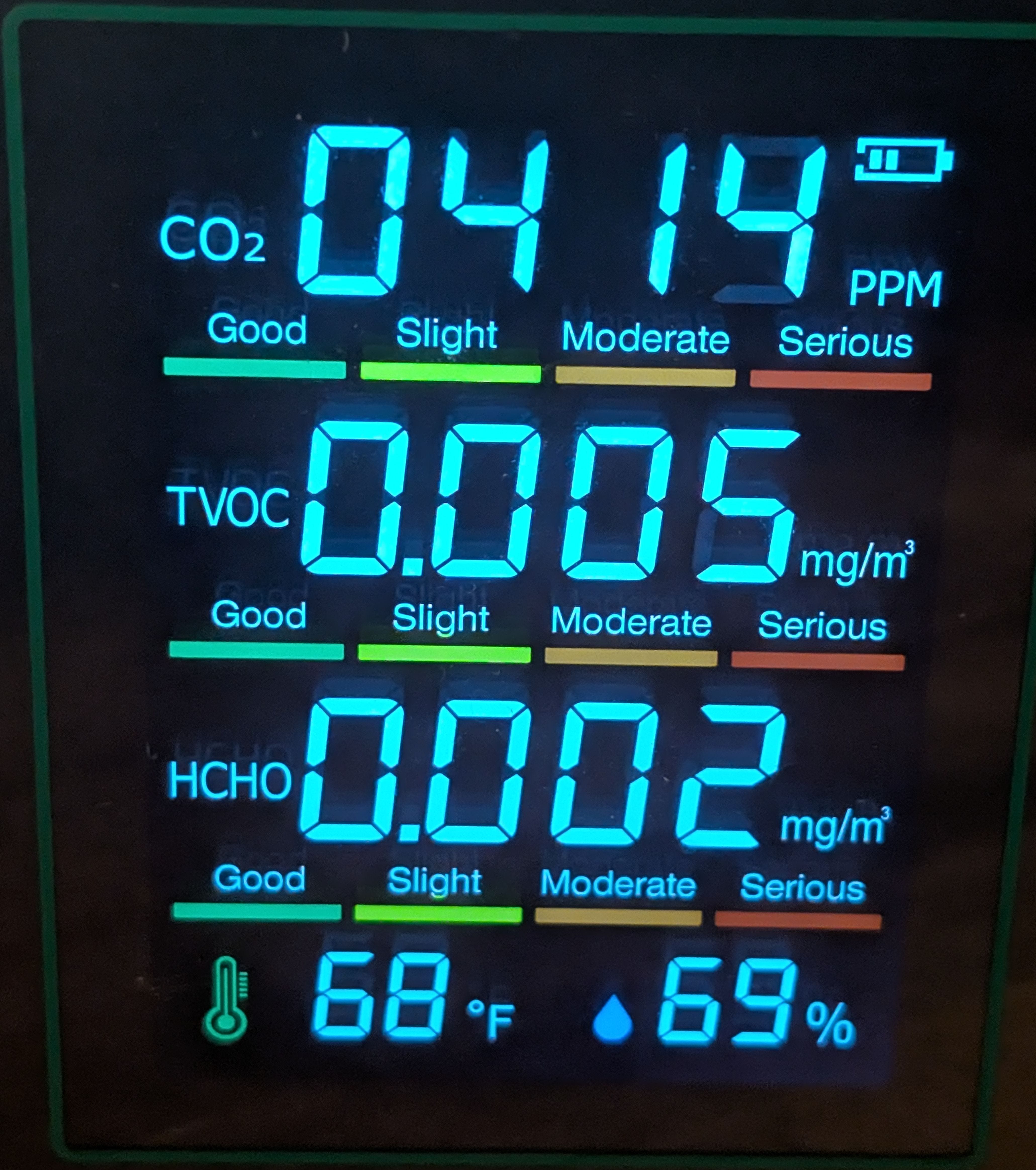
TVOC .078 → .005
HCHO .029 → .002
As you can see the increase in air quality is significant. One thing that is important is getting an air purifier with a carbon filter, a regular one wont effect the HCHO levels. Another important thing is to make sure you take the plastic off the filter. This might seem like an obvious thing, but there were some videos floating around a few years ago where people got an air purifier and had been running it for months or years only to find out the filter that came with it was wrapped in plastic.
I’ve measured a few people’s air quality, and most of the time it’s not terrible, it looks like the before shot on top, but I did find someone who had everything in the moderate zone.