
Partying Like It's 999
What Life Looked Like Before Endless Entertainment

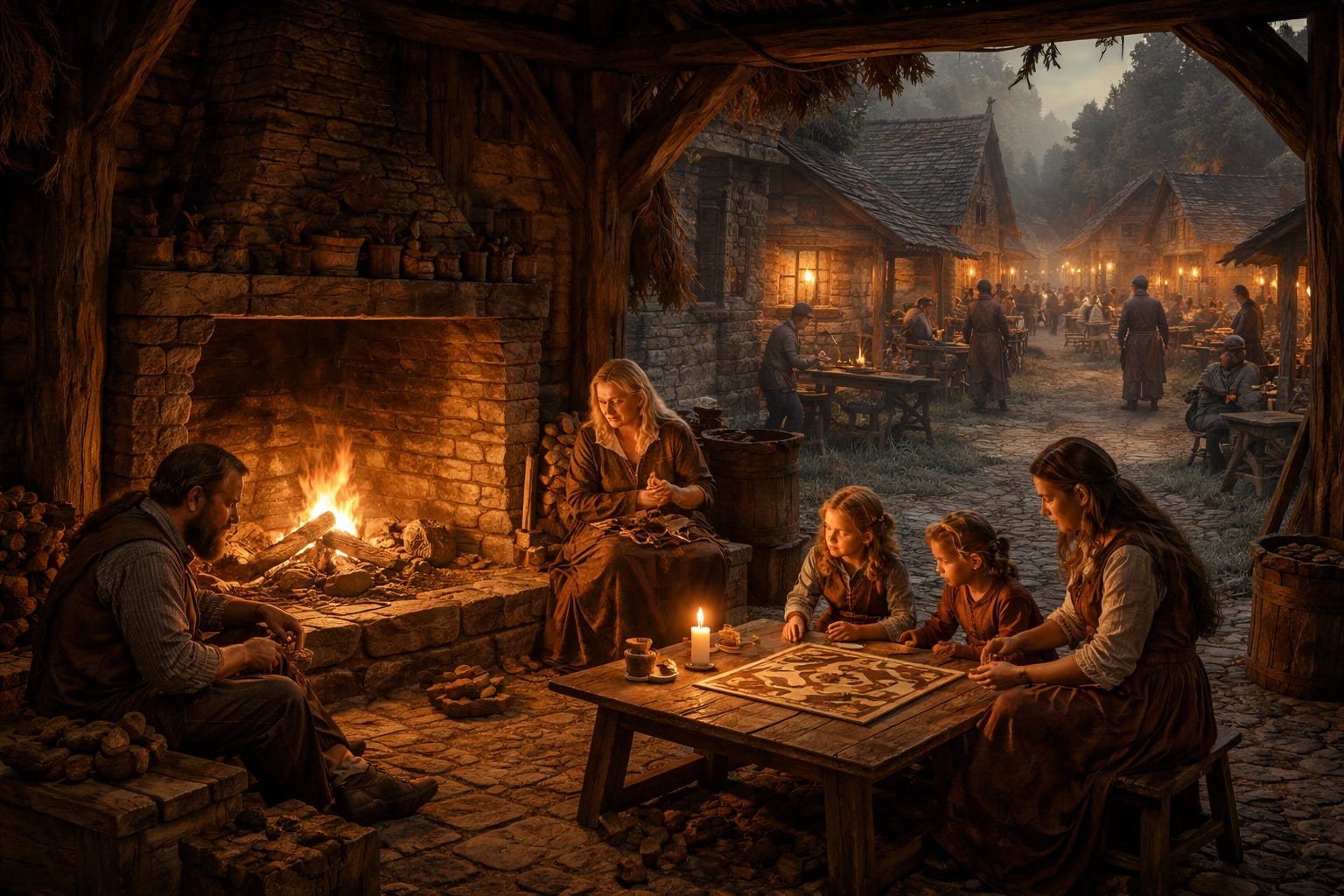
I wrote earlier about uninstalling Instagram. I’ve also removed some other things in my life recently which I’ll write about in the future, but I’ve been finding myself with a lot more extra time on hand now and sometimes struggling how to use it. This brought up the question, what did people do before electricity and all of our modern conveniences and forms of entertainment?
In 999 waking up in the morning, first thing you’d do is put some logs on the fire, located in your house. Most homes had a central open fire in a stone or earthen hearth. The smoke just vented through a hole in the roof (no chimneys yet in most places). Matches had not been invented yet so letting the fire go out would be more of an ordeal. If you lived in a big city, population around 300k-500k, I’m sure you could walk over to your neighbors house and grab an already burning log to get your fire going.
No morning coffee yet, unless you happen to live around Ethiopia. Most people skipped breakfast but if you wanted something you might eat some stale bread with lard and wash it down with some ale. Clean water didn’t really exist yet, so the safest beverages were alcoholic. The percentage would be lower than today, around 1-2% alcohol. When I first heard everyone drank beer all day because water was unclean I thought everyone must have been walking around inebriated but it was just a light buzz. The most alcoholic beverage was wine which would be saved for the evening.
85% to 90% of the population were farmers who worked from sunrise to sunset, but taking breaks in between. In the winter there was less farm work to be done so other things like tool repair, animal care and staying warm were the focus.
About 5-7% of the population were craftsmen, blacksmiths, carpenters, weavers, potters, bakers, etc. They mostly lived in the city and worked about 8 to 10 hours a day. Without artificial light the sunlight was very important and people had to take advantage of it as much as they could. Not many people were ever working late hours. Candles existed but they were mostly for the wealthy. A pound of tallow candles made of animal fat cost around $15-$25 (Adjusted for inflation) and higher quality beeswax candles went for $80 to $120. More common were rushlights, people would gather leaves and twigs and coat them in animal fat or grease. These were essentially free.
Women helped with farm work as well as cooking, cleaning, spinning, weaving, brewing beer, preserving food, raising children and trading goods at the market. After the fall of the Roman Empire money was not used as much and barter was the most common form of transaction. Taxes were paid in material goods like portions of crops. The rest of the population was made up of merchants or traders, clergy, nobility and knights all of which were less than 1-2% of the population each.
Literacy in Europe was 1%-5% so after work not a lot of people were reading books. Theaters became less common after the fall of the Roman Empire. So what did people do for fun? There were harvest festivals, weddings, bored games like chess and Nine men’s morris, a game which dates back to between 42 BC and 1400 BC. You can actually still buy it today on Amazon. Dice was also popular. Archery practice was common as hunting was very common at this time. There were entertainers who told stories and played music. Taverns, alehouses, mead halls and wine houses were common during this time as well.
Life was very different back then. One thing I’ve been doing recently is setting a timer and living life without any internet related devices and spend time getting into actual art on paper, reading, cleaning, playing guitar. It really bring me back to what my childhood felt like.