
Why is Pyrex so Durable?
There's an exciting twist at the end!

It was introduced in 1915 by the Corning corporation. It’s technical name is borosilicate glass, a type of glass made with silica and boron trioxide, soda ash and alumina (aluminum oxide). The reason they are great for hot foods is they are resistant to thermal expansion. Hot glass coming into contact with cold water quickly shrinks that region of the glass, causing tension and often breaking the glass.
The reason it shrinks less is that the boron changes the configuration of the atoms in the glass to be more tightly space. Normally each silicon atom bonds to 4 oxygen atoms in a shape called a tetrahedron.
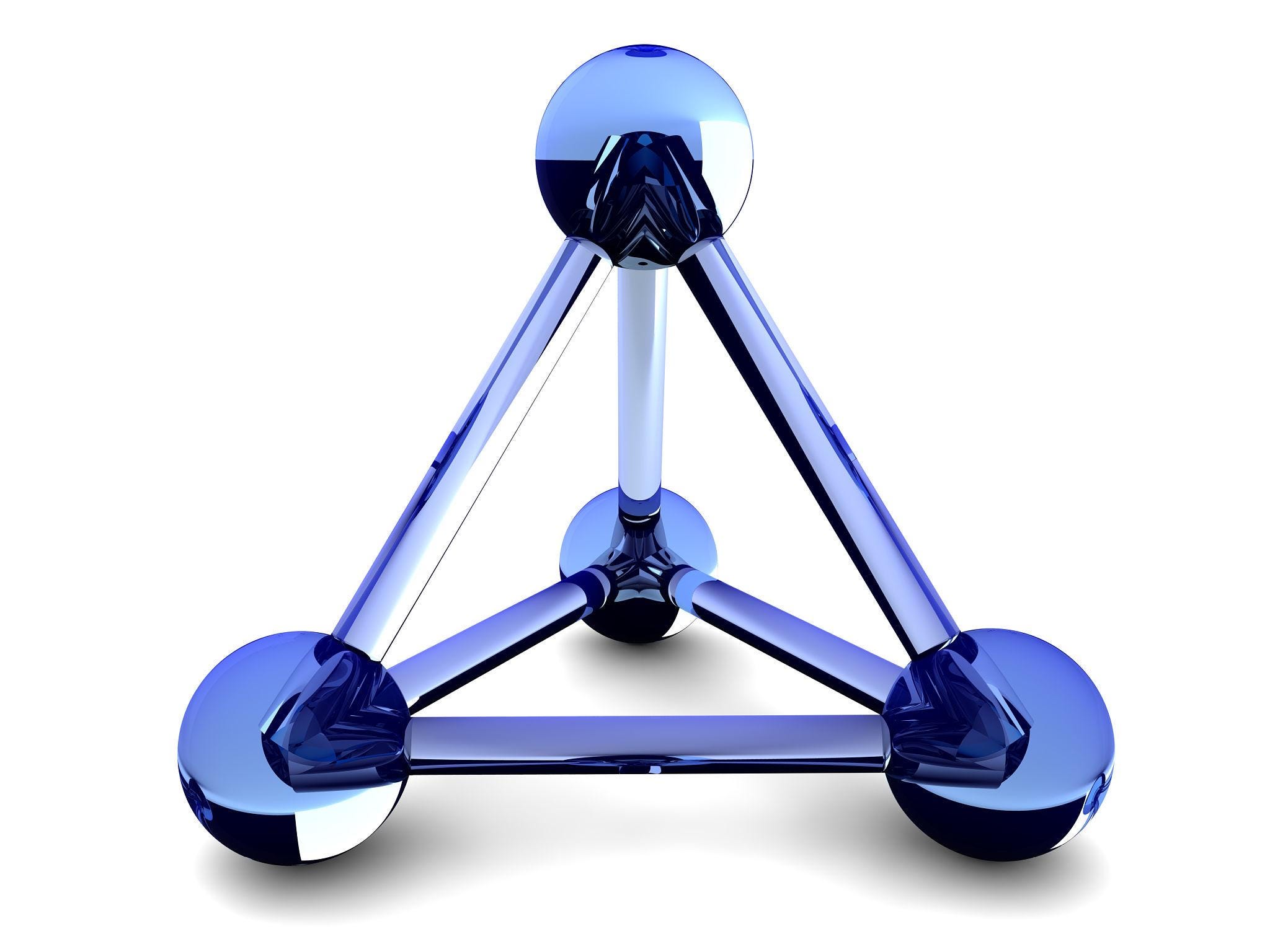
Boron atoms are smaller than silicon atoms, Boron is 5 on the periodic table while silicon is 14. This means bonds created with oxygen are shorter and stiffer so the orientation of the molecule doesn’t change direction as much. Because the bonds are shorter they can’t wiggle as much, like the difference between a short spring and a long one. In addition to that the angle of the bonds change, and you get other shapes like triangles that make the atoms harder to wiggle around.
There is something else called a Prince Rupert’s Drop which is made by dipping molten glass into cold water. The outside is cooled quickly while the inside takes longer, creating a stress. As the inner glass cools and contracts, it pulls against the hardened surface, putting the outside in compression and the inside in tension. Since cracks begin at surfaces and open under pulling stress, that surface compression acts like a permanent clamp that resists cracks. This makes the glass very difficult to break. I originally thought something like this effect might be responsible for the toughness of Pyrex, but turns out it’s just a different chemical composition.
The whole reason I got interested in this was from dropping a food storage container from a great height without it breaking. It turns out Pyrex isn’t actually more shatter resistant from impacts, it’s specifically in regards to temperature changes. But it turns out there is a twist. Pyrex made in the US isn’t the original Pyrex made with Boron, it is tempered soda-lime glass which does resist impacts better, but it is still as susceptible as regular glass to fast temperature changes breaking it. Soda-lime glass is how most glass is made, so all the properties that make US Pyrex different from regular glass is the tempering. This is very similar to the Prince Rupert’s Drop, except they use cold air instead of water after heating.
If you want to get the original Pyrex version in the US you need to look for brands that borosilicate cookware.